

AI Video Production for UAE Brands: A 2026 Guide for Dubai and Abu Dhabi Marketers


UAE brands commissioning AI video face a sharper question than most: can a studio brief remotely and deliver content that actually reads as Khaleeji — not Egyptian Arabic, not Levantine, not generic Gulf? The answer depends on the studio's language capability and production discipline, not on whether their address is in Dubai. Sadara Studio is based in Riyadh and Jeddah and works with brands across the Gulf from there, handling Arabic localisation as a core part of the production pipeline, not an afterthought.
This guide covers what UAE brands — from consumer FMCG groups in Abu Dhabi to digital-first retailers in Dubai — should know before starting their first AI video commission.
Why UAE brands are moving to AI video production
The case isn't speed alone, though AI production does cut production cycles significantly. The real driver for UAE brand teams is the ability to produce multiple language and format variants from a single brief. A UAE campaign typically needs a Khaleeji Arabic version, an English version, a 30-second broadcast cut, and a set of 9:16 vertical edits for TikTok, Instagram, and Snapchat — all from the same creative.
Traditional production makes each of those a separate line item: a new VO session, a re-edit, a fresh export. AI production bundles them. The brief resolves once; the variants deliver together. That changes the economics of campaign production from a one-time spend to a recurring capability.
Gulf markets also move faster than their production cycles used to allow. Ramadan, Eid, National Day UAE, and White Friday each demand fresh creative on short notice. AI production timelines are measured in days, not months.
Getting Khaleeji right: dialect, casting, and visual accuracy
The most important localisation decision for a UAE brand is Arabic register. Khaleeji Gulf Arabic — the dialect spoken across the UAE, Saudi Arabia, and Kuwait — is distinct from Egyptian Arabic (the most broadly understood) and from Levantine Arabic. Consumer campaigns targeting Emirati viewers expect Khaleeji VO and phrasing. Campaigns targeting a cosmopolitan Dubai audience may use Modern Standard Arabic, English, or a combination.
Getting this wrong breaks trust with viewers immediately. Sadara Studio locks dialect and VO direction at brief stage, before production begins, and works with Arabic-language specialists on script and voice casting.
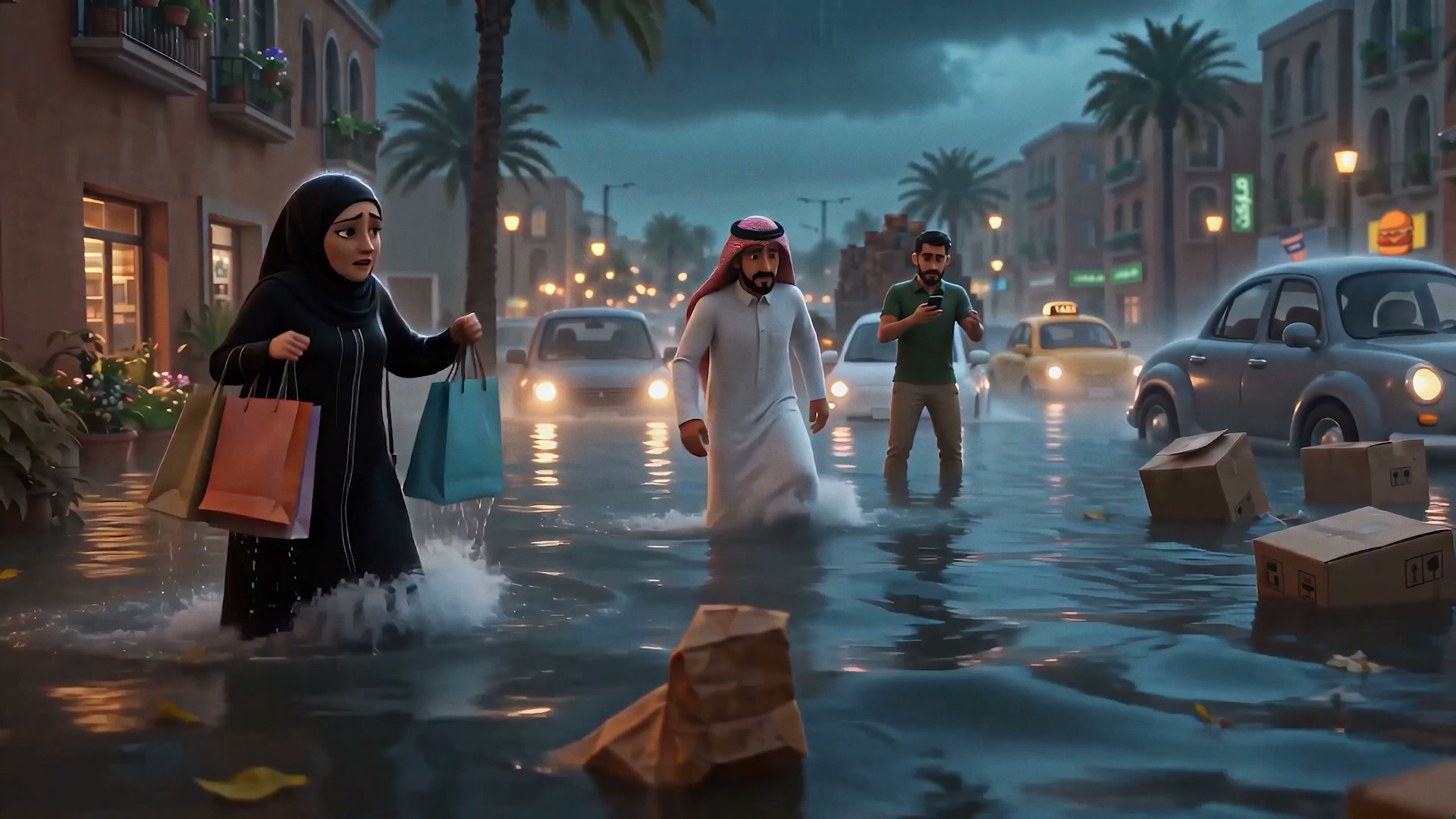
Visual accuracy follows the same principle. A UAE brand film that reads correctly for the market uses wardrobe and settings the audience recognises: kandura on male characters, abaya in local cut and fabric (Gulf styling differs from Levantine and from modest-fashion generics), contemporary Gulf architecture, and environmental detail — light quality, interior design references — that places the work in the region. Sadara Studio's art direction process fixes these decisions in the character sheets and location keyframes that the client approves before animation runs. Changes at that stage cost a review cycle; changes after animation runs are expensive everywhere.
How a remote brief-to-delivery engagement actually works
From a UAE brand team's perspective, briefing Sadara Studio remotely works like briefing any production partner — the process simply has no travel logistics.
- Brief call: brand guidelines, campaign objective, audience, platform requirements, Arabic/English split, and format list.
- Character and location development: the studio returns character sheets and location keyframes for approval before animation begins. This is the critical gate where localisation is locked.
- Asynchronous review rounds: shared review links, no flights or location meetings required. Revisions happen on a tight cycle.
- Delivery: final files in every required format and aspect ratio, with source files held for future campaign updates.
Sadara Studio has delivered full production cycles on this model for Saudi brands, demonstrating the pipeline works end-to-end without on-site presence. For the Nada Greek Kefir campaign — produced with Media Zone — an AI-native brief resolved into a broadcast-quality commercial in under 35 hours of active production time. That turnaround was not a one-off experiment; it reflects what a mature AI pipeline, briefed well, consistently delivers.
Multi-format delivery: one brief, every platform
UAE brands running cross-channel campaigns typically need: broadcast (16:9, 30s and 15s), social vertical (9:16, 15s for Reels, TikTok, Snap), digital OOH (various ratios depending on the network), and Arabic and English versions of each. That is a large deliverables matrix from a single campaign concept.
AI production handles format and language variants without the proportional cost increase that traditional production charges. The brand's character design, location, and creative direction are built once; the variants are derived systematically. Arabic right-to-left text layout, alternate VO tracks, and platform-specific timing are addressed in export rather than requiring new animation runs.
The practical result: a UAE campaign that historically required five or six discrete production engagements can now be handled in one brief, with all variants delivered together.
Frequently asked questions
Can a Riyadh-based studio produce content that reads as Emirati rather than Saudi?
Yes, when dialect and visual direction are briefed and locked correctly. Khaleeji Arabic is the shared register across the UAE, Saudi Arabia, Kuwait, and Bahrain — regional differences sit in specific vocabulary and intonation, which VO casting and script review address. Visual localisation (wardrobe, settings, environmental detail) is handled in art direction, not location. A production's cultural accuracy depends on the briefs and references provided, and on the studio's ability to interpret them precisely — not on the studio's city.
Does the review process work across time zones?
The UAE is one hour ahead of Saudi Arabia, so overlap is near-total during standard working hours. Review rounds run on shared links with frame-accurate comment threads — no calls required for straightforward feedback, though calls are available at every stage. Most UAE brands working with Sadara Studio find review cycles faster than with local production partners because the studio has fewer competing local commitments driving its schedule.
What formats does Sadara Studio deliver?
Sadara Studio masters in 16:9 and 9:16, which between them cover broadcast, YouTube, and every vertical placement. Video formats include ProRes for broadcast, H.264/H.265 for digital, and separate audio files for VO and music tracks. Arabic and English versions deliver as independent files. Formats are confirmed at brief stage and locked before production begins.
How do I start a UAE brief with Sadara Studio?
Send the brief outline — platform, audience, format requirements, and campaign timeline — via the contact page. The studio will come back with questions and a proposed production approach before any engagement is formalised. There is no minimum commitment for a first commission.
Start your Gulf campaign brief with Sadara Studio
UAE brands working with Sadara Studio get the same production capability that delivered broadcast-quality AI commercials for Saudi brands — with full Arabic localisation, every format, and a review process designed to run at Gulf working-week pace. If your next campaign needs Khaleeji-accurate AI video, start the conversation here.
Related Articles




Sadara
Studio

