

Ramadan 2027 Campaign Planning for Saudi Brands: When to Brief, Lock and Deliver


Ramadan 2027 is expected to begin around Monday, 8 February, confirmed only once the crescent is sighted the evening before, with Eid al-Fitr expected to follow around 9 or 10 March. For a brand planning a campaign around that window, the date that matters is not 8 February. It is the brief date that has to land weeks earlier for a finished film to be live on day one instead of day ten. Here is how to work that calendar backward.
The Ramadan 2027 calendar, and why it moves every year
Ramadan is a lunar month, so it lands roughly ten to eleven days earlier on the Gregorian calendar each year. A brand that schedules production off last year's Ramadan dates is already briefing too late. For 2027, Saudi Arabia's Umm al-Qura calendar places the first day on 8 February, with Eid al-Fitr expected around a month later. Both dates are "expected" until the crescent is actually sighted, which is exactly why a production plan needs to hold under a day or two of slippage rather than assume a fixed date.
Working backward: when to brief, lock and deliver
A premium AI production has three real checkpoints, and each one has to land before the next can start. The brief needs to be in by late November or early December 2026, so casting, wardrobe, and the look of the setting can be developed and approved before the holidays slow everyone's calendars down. Keyframe sign-off, the point where every character, location, and shot is locked, should land in early January 2027. Final delivery then sits in the last week of January, giving a finished Ramadan film roughly ten days of air time before the month even starts, instead of racing to catch up once it has. The same brief that holds this timeline can also carry a second, shorter cut built for the Eid al-Fitr follow-on, so the Eid edit is not a separate production started from zero in February.
One brief, two markets: running a Saudi and a Qatar cut from the same production
Brands running Ramadan commercial production across Saudi Arabia and Qatar often assume that means two separate shoots. It does not have to. A single locked set of characters, environments, and brand assets can be recut for each market from one production, with the actual market-specific work concentrated where it is felt most: dialect in the voiceover, not a different film. A Saudi-facing cut can carry a Najdi or Hijazi register where the brief calls for it, while a Qatar-facing cut uses a voice and pacing that reads correctly there, without touching the underlying animation. Sadara Studio is based in Riyadh and Jeddah and produces for brands across the Gulf from there; running a Qatar cut from a Saudi production is a production-planning question, not a presence question, and it carries no cross-border tax or regulatory claims, since that is a client's own legal team's call to make.
What a locked brief buys you when the date moves
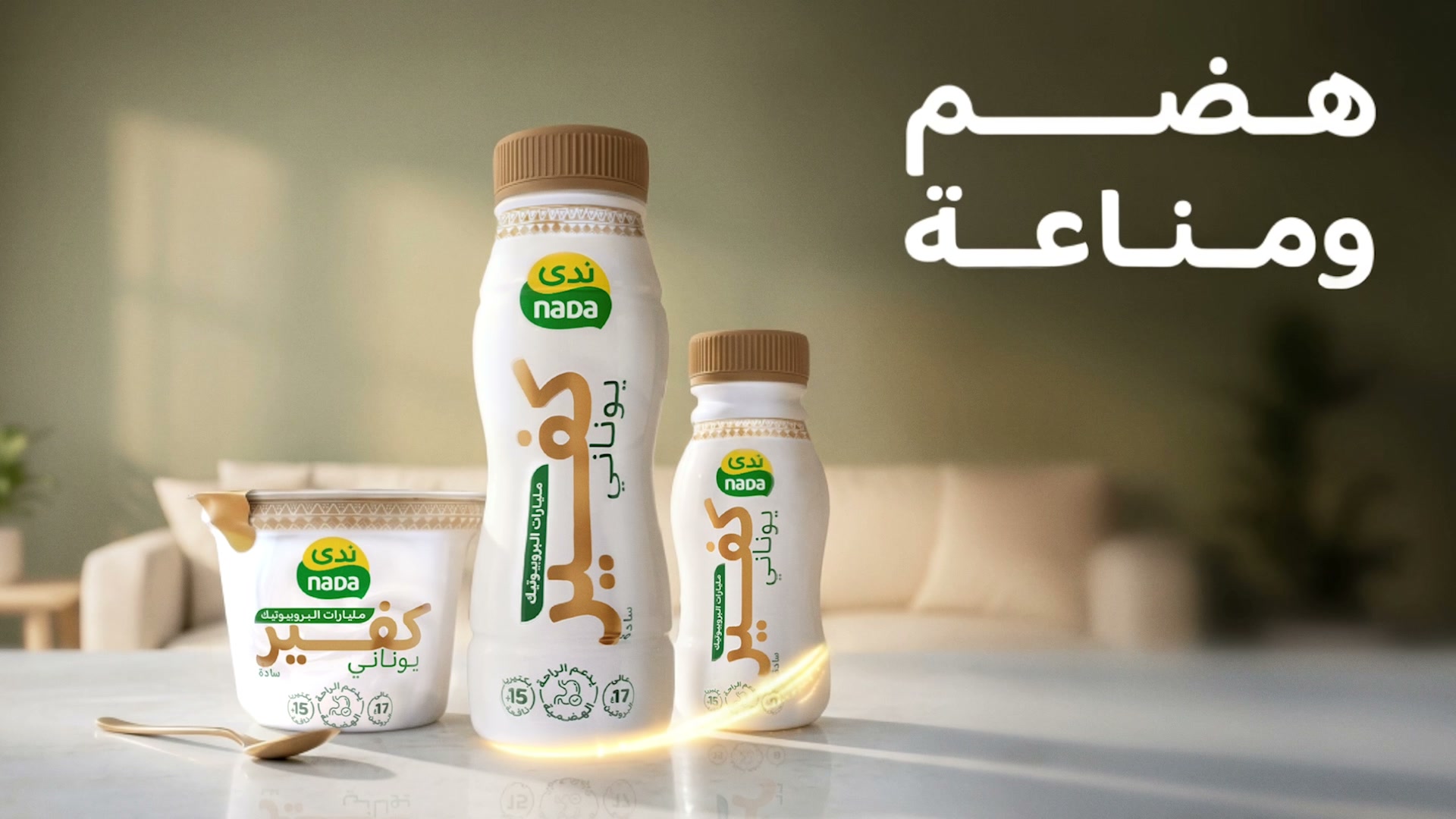
Because the crescent sighting can still shift the first day of Ramadan by a day either way, a production built around a single rigid delivery date is fragile by design. A locked brief, with characters and environments approved well ahead of the air date, absorbs that kind of last-minute shift easily: the edit can move with the date rather than against it, because nothing has to be reshot or rebooked. Sadara Studio's Nada Greek Kefir launch film is the clearest proof this pipeline holds under a hard deadline: a winning spec and full sample suite came together in under 35 hours, then the finished animated film took about three to four effective weeks of production, delivered as a 55-second master cut down into a 30-second and four 15-second edits in both 16:9 and 9:16. That is the same discipline a Ramadan brief needs: the heavy creative work finished early, so the final weeks are about delivery, not invention. Sadara Studio's guide to planning AI video around Ramadan, Eid and National Day covers how that same single-brief approach extends across the Kingdom's whole calendar, and brands building a Ramadan giving or donation moment specifically can see how that plays out in Sadara Studio's piece on AI video for Saudi charities and foundations.
Frequently asked questions
When should a Saudi brand brief its Ramadan 2027 campaign?
Late November or early December 2026 at the latest, so casting, wardrobe, and environment work can be approved before the holiday season slows review cycles, leaving enough runway for keyframe sign-off by early January.
What happens if the Ramadan 2027 start date shifts after the brief is locked?
A production built on a locked brief, with characters and locations already approved, can absorb a one or two day shift in the crescent sighting without reshooting anything. The edit moves with the confirmed date rather than against it.
Can one production serve both a Saudi and a Qatar cut of the same Ramadan campaign?
Yes. The underlying characters, locations, and brand assets are built and approved once, and the market-specific work, mainly dialect and pacing in the voiceover, is applied per market without rebuilding the production.
Should the Eid al-Fitr cut be a separate project from the Ramadan campaign?
No. Planning the Eid al-Fitr edit as a second cut from the same Ramadan brief, rather than a standalone production started in February, keeps both deadlines realistic and avoids a second full brief-to-delivery cycle.
Brief your Ramadan 2027 campaign with Sadara Studio
If a Ramadan or Eid al-Fitr 2027 campaign is on your calendar and the production timeline feels tight against the expected 8 February start, talk to Sadara Studio about a brief built to hold that date.
Related Articles



Sadara
Studio

