

AI Commercial Production in the UAE: How a Regional Studio Engagement Actually Works

A UAE marketing team weighing an AI commercial has to answer a question a Dubai or Abu Dhabi production house never raises: what does it actually mean to engage a studio that is not in the room, not in the country, and not going to send a crew? The honest answer is that a well-run AI engagement looks less like a shoot and more like a structured software project: scoped stages, fixed approval gates, and asynchronous review, rather than a set visit and a wrap party. Understanding that structure, not the studio's postcode, is what determines whether the engagement runs smoothly.
Sadara Studio is based in Riyadh and Jeddah and produces AI commercial work for brands across the Gulf from there. This article covers what a UAE brand team should expect from that kind of engagement, stage by stage.
Why the engagement model matters more than the studio's address
Traditional production ties trust to proximity: a local studio can be visited, a set can be walked, a director can be met over coffee. AI production removes most of the reasons that proximity mattered in the first place. There is no set to visit because there is no physical location; there is no crew to vet because there is no crew day. What replaces proximity as the basis for trust is a documented process: clear approval gates, a visible review trail, and deliverables that match a written spec. A UAE brand team should judge a regional studio on whether that process exists and holds up, not on whether the studio keeps an office in Dubai.
How a UAE engagement runs, stage by stage
A Sadara Studio engagement for a UAE brand follows the same structure as any commission, run entirely on calls and shared review links:
- Scoping and kickoff. The brand shares its objective, audience, platform list, and Arabic/English split. Sadara Studio returns a production plan: stages, review points, and a delivery date.
- Character and location approval. Before any animation runs, the studio delivers character sheets and location keyframes for sign-off. This is the single most important gate in the engagement, because every downstream frame depends on decisions locked here.
- Review rounds. Cuts move through shared review links with frame-accurate comments. There is no travel dependency in either direction, and rounds are scoped in the kickoff plan rather than left open-ended.
- Delivery and handover. Final masters arrive in every agreed format, alongside source files retained for future campaign updates, so a later cutdown or seasonal refresh does not start from zero.
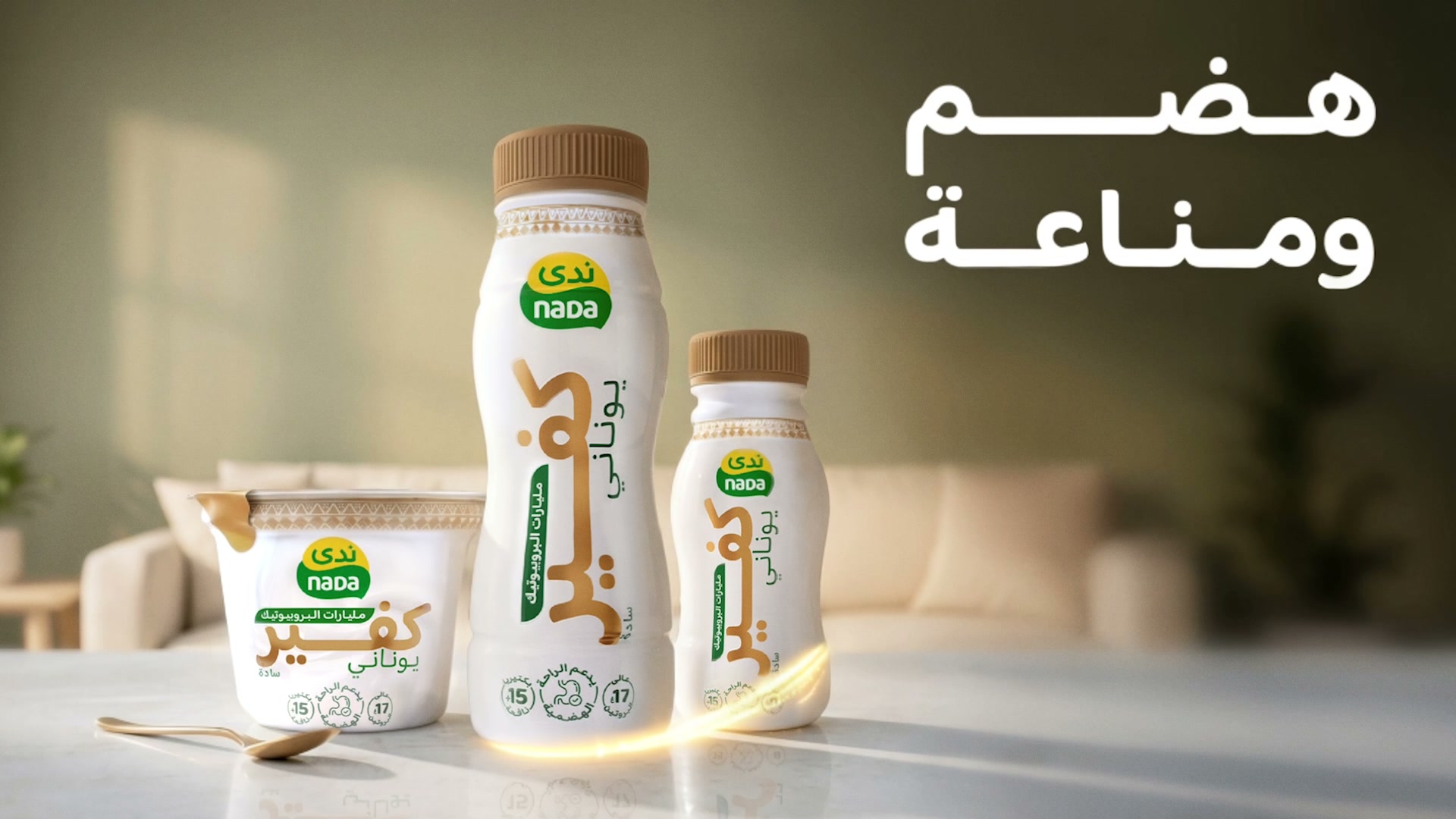
The Nada Greek Kefir campaign ran on this exact structure end to end, from brief to final delivery, in under 35 hours of active production time. That is the pipeline a UAE engagement draws on, not a separate process built for one market.
What to verify before signing
A UAE brand team scoping a regional AI engagement should confirm four things before committing: who has final creative sign-off and how many review rounds are included; what file formats and source assets are handed over at delivery, and whether they are usable for future edits without re-engaging the studio; how character, location, and brand-system assets are stored for reuse across a campaign's lifespan; and what the studio's actual delivery track record looks like on comparable work. None of this requires a local presence to evaluate. It requires a studio willing to put the process in writing at kickoff, which is a fair thing to ask of any production partner regardless of where they are based.
Where a regional engagement fits versus a one-off vendor
The value of a regional studio compounds when the relationship extends past a single spot: a locked character and brand system means the next commercial, the next seasonal cutdown, or the next platform variant starts from an established foundation instead of a fresh brief. That is a meaningfully different relationship than hiring a production house per project. For UAE brands running a multi-market Gulf campaign alongside their UAE work, the same engagement model scales across markets from one production, detailed further in Sadara Studio's guide to producing one GCC campaign brief across Saudi, UAE, Qatar and Kuwait. For the localisation specifics, Khaleeji dialect, wardrobe, visual references, that a UAE brief depends on, see the full UAE production guide.
Frequently asked questions
Does Sadara Studio need a local UAE entity to deliver a UAE commercial?
No. Sadara Studio is based in Riyadh and Jeddah and delivers UAE commissions remotely, using the same brief-to-delivery process it runs for Saudi brands. There is no production step in an AI engagement that requires a physical presence in the market the work is destined for.
How many approval rounds are typical in a regional engagement?
The number of rounds is agreed at kickoff and written into the production plan rather than left open. Most engagements scope two to three structured review rounds after the initial character and location approval, with the heaviest feedback concentrated early, at the styleframe and keyframe stage, where changes are fastest to make.
What happens if a UAE brand needs a revision after delivery?
Because Sadara Studio retains source files, character sheets, and location assets after delivery, a later cutdown, format variant, or seasonal refresh can be produced from the existing production rather than restarting the brief. This is part of why briefing well the first time, as covered in the studio's guide to briefing an AI video production studio, pays off well beyond the first deliverable.
Can a UAE brand run review calls during Gulf working hours?
Yes. The UAE sits one hour ahead of Saudi Arabia, so the working week overlaps almost completely. Review calls, when needed, run inside standard Gulf business hours on both sides, and most feedback moves through asynchronous comment threads that do not require a call at all.
Scope your UAE engagement with Sadara Studio
If your team is evaluating a regional AI production partner for a UAE commercial, start with the process, not the postcode. Get in touch with Sadara Studio to scope a kickoff plan, approval structure, and delivery date for your next brief.
Related Articles





Sadara
Studio

