

AI Video Production Trends 2027: What Saudi Brands Should Plan For


Saudi brands planning AI video campaigns for 2027 are watching six production trends settle into place this year. None of them are abstract: each is already playing out in a live platform feature, a government guideline, or a published study, and each changes a different part of how a brief gets produced. Here is what is actually shifting, and what to plan for before the next campaign cycle starts.
Craft and Culture: Dialect-Accurate Voice and Short-Form Drama
Generic "neutral Arabic" voiceover is losing ground. AI voice tools can now clone and adapt voices across Gulf dialects rather than defaulting to one flattened register, and GCC marketers are starting to treat dialect accuracy, not just Arabic versus English, as a real differentiator. For a Saudi brand, that means a Hijazi, Najdi, or Gulf-wide register has to be a deliberate casting decision, the same way wardrobe and location are. Sadara Studio's guide to Arabic brand film production across the Gulf covers how dialect, casting, and cultural fit work together in a production brief.
Short-form video is also moving from single spots to serialized, episodic formats. TikTok formalized branded "Mini Dramas" as its own ad product in 2026, built for brands to run multi-episode stories directly from their own account rather than a one-off cut, and the platform reports a meaningful lift in incremental reach for campaigns that use it over off-platform acquisition alone. A Saudi F&B or retail brand can plan a locked cast and world once, then produce a short series of linked episodes instead of a single ad, reusing the same production pipeline across the run. Sadara Studio's guide to AI short-form video for Saudi brands covers the format fundamentals this builds on.
Trust and Transparency: Disclosure and the Studio-vs-Tool Question
Disclosure is becoming a real planning question, not a footnote. Saudi Arabia's SDAIA has published guidance addressing deepfakes and generative AI that calls for transparency and labelling of synthetic content, and separate published research found that telling a viewer an ad was AI-made measurably reduced its click-through rate compared with an unlabelled ad. Brands should expect to make a deliberate call on when and how to disclose AI involvement, case by case, rather than treat it as settled either way. Sadara Studio's guide to whether consumers trust AI ads covers how Saudi audiences are actually responding.
The gap between brands that have tried an AI tool and brands that use one properly is also widening. A recent survey of marketing and advertising professionals across the UAE and Saudi Arabia found that the large majority had used an AI tool at some point, but only a minority used one regularly as part of their workflow, and most respondents said they worried about relying on AI output without human oversight. That gap is exactly where a production studio, rather than a self-serve tool, earns its place on a brief. Sadara Studio's guide to AI video studio versus AI video tool covers which one a given brief actually needs.
Production Infrastructure: Virtual Production and Multi-Variant Testing
Generative AI is not the only production method getting investment. The Saudi Film Commission opened a large LED-volume virtual production stage at JAX Film Studios in Riyadh, built for large-scale physical production alongside the Kingdom's growing film infrastructure. For brand marketers, the practical takeaway is less about adopting LED-volume shoots directly and more about what it signals: production capacity in Saudi Arabia is scaling across every method, generative AI, virtual production, and traditional shoots, and the right choice depends on the brief's scale and timeline, not on whichever method is newest.
Multi-variant testing keeps compounding as a reason brands adopt AI production at all. Once a cast, world, and sound design exist, producing five or ten cut-downs for different placements and audiences reuses that same production base instead of rebuilding it from scratch, which is the clearest speed advantage AI production holds over a traditional shoot. That is already the core case Sadara Studio makes for AI production, laid out in how AI multiplies creative output from one brief, and it is the trend most likely to keep paying off through 2027 regardless of which platform or format wins.
Frequently asked questions
Will AI-generated ads need to be labelled in Saudi Arabia by 2027?
There is no advertising-specific disclosure law yet, but SDAIA's published guidance on deepfakes and generative AI already calls for transparency, so brands should plan for disclosure to become a live compliance question rather than assume it stays optional.
Is episodic short-form video worth planning for a 2027 campaign?
Yes, for brands with a recurring story to tell. A locked cast and world can be produced once and recut into a short series rather than a single spot, which is where an AI production pipeline earns back its setup cost.
Does virtual production replace AI video production?
No, they solve different problems. Virtual production on an LED volume suits large-scale physical sets, while generative AI production suits speed, versioning, and volume. Most Saudi brand briefs fit the second.
What is the biggest production trend for Saudi brands heading into 2027?
Multi-variant testing. Once a brand has an AI-produced cast and world, producing multiple cuts for different platforms and audiences from the same production base is the clearest, most repeatable return on the investment.
Plan your 2027 production now
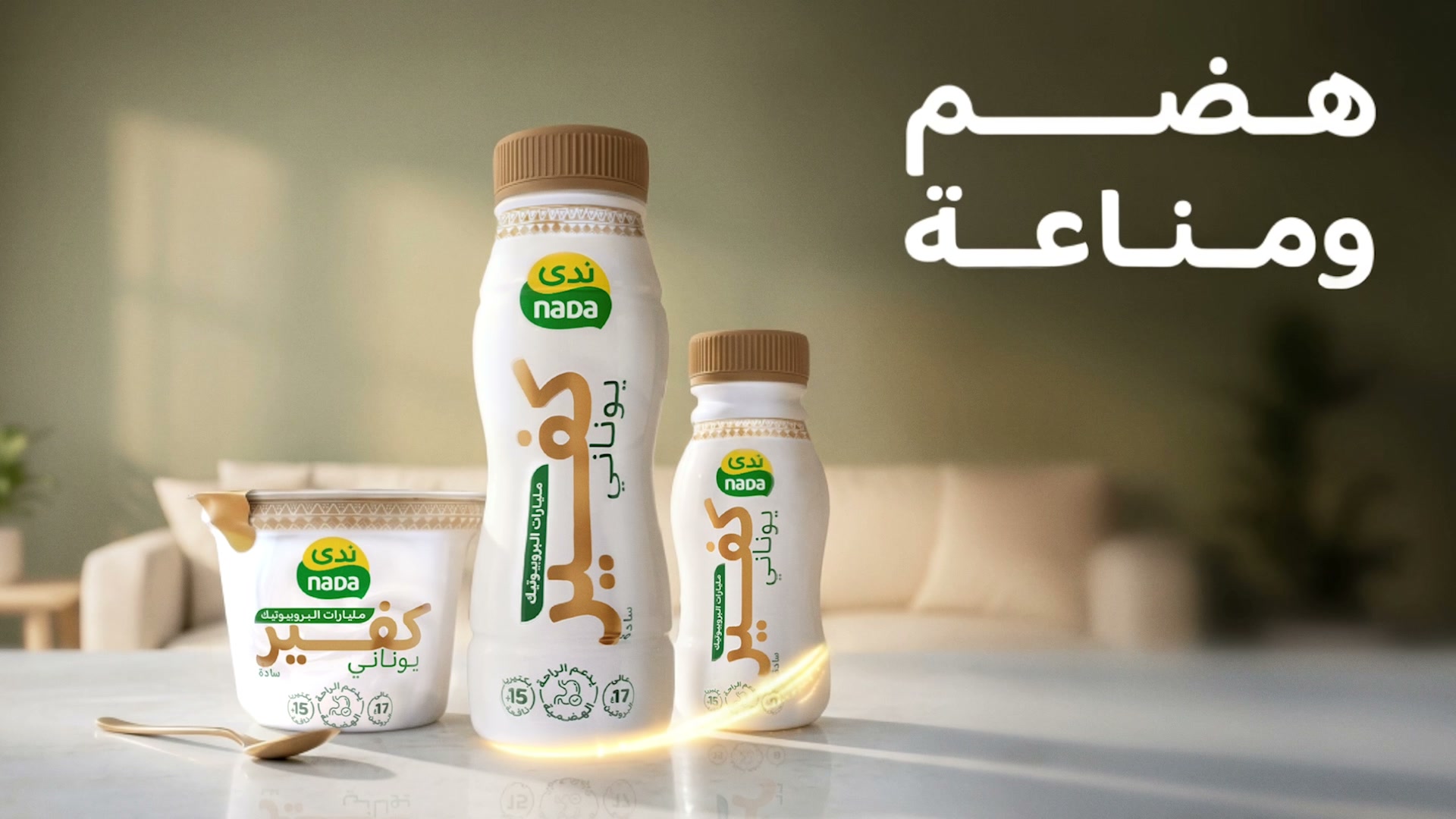
Sadara Studio built its production pipeline around exactly this kind of reuse: a winning proposal and full sample suite delivered in under 35 hours for the Nada Greek Kefir launch film, then a premium film produced over the following weeks. Talk to Sadara Studio about where your brand's 2027 production plan should start.
Related Articles



Sadara
Studio

